

Who was Aristotle?
Aristotle was a Greek philosopher who lived over 2,300 years ago in ancient Greece. He was a student of Plato and later became a teacher to Alexander the Great.
Aristotle was interested in many subjects, including science, nature, politics, and how people should live their lives.
He believed that we learn by observing the world and by practising good habits. He called these good qualities virtues, such as being kind, honest, and fair.
What are some examples of good habits you can practise in your daily life?
If you want to learn more, watch this video:

1 / 2


Aristoteles-statuen i Stagira i Hellas
What did Aristotle believe?
Aristotle believed that being a good person is something we learn by practicing good actions. His idea is called virtue ethics. This means we focus on building good habits, like being kind, honest, and fair.
Instead of following strict rules, Aristotle thought we should ask:
What would a good person do?
He also believed in finding balance. Being brave, for example, means not being too scared, but also not taking dangerous risks.
Example
If you see someone being treated unfairly, staying silent might be fear, and reacting angrily might be too much. Speaking up calmly shows courage.
What do you think?
Would you speak up if you see someone being treated unfairly?
1 / 2

En turgåer strekker ut hånden for å hjelpe en venn med å klatre opp til toppen av fjellet
What was Aristotle’s goal in life?
Aristotle believed that the goal of life is not just to feel happy for a moment, but to live well over time. He used the word eudaimonia, which means living a full and meaningful life.
For Aristotle, living well means growing, learning, and becoming a better person step by step. It is about how you live your life every day, not just how you feel.
Imagine this
Doing your homework might not feel fun right away, but it helps you learn and grow over time.
What does “living well” mean to you?
Can something difficult still be good for your life?
1 / 2

Tenåringer som lærer å spille instrumenter
Learning Through Experience
Aristotle believed that we learn by doing and experiencing things, not just by listening or reading. In this way, practice helps us understand the world and improve over time.
This also means that making mistakes is a natural part of learning. Each experience teaches us something new and helps us grow.
Do you think mistakes can help you learn?

En gruppe studenter som arbeider med et studieprosjekt
Why Do Habits Matter?
Aristotle believed that what we do every day shapes who we become. When we repeat actions, they turn into habits, and these habits help form our character.
Good habits, such as being kind, honest, or responsible, help us become better people. Small actions, repeated over time, can make a big difference.
For example
If you practise being polite every day, by saying “please” and “thank you,” it becomes natural, and others will see you as respectful.
Let’s think about habits…
- What is one good habit you already have?
- What is a new habit you would like to build?
1 / 3

Tenåring som sitter på sengen med en bærbar PC
Using Reason to Make Good Choices
Aristotle believed that we should use our reason; our ability to think and to make good choices.
Instead of acting quickly or only following our emotions, we can pause and think about what the best thing to do is.
Example
If you feel angry with a friend, you might want to shout. But if you stop and think, you may choose to talk calmly instead.
Can you remember a time when thinking helped you make a better choice?
1 / 2

En ettertenksom tenåring på jakt etter en løsning
What Does It Mean to Live a Good Life?
Aristotle believed that living a good life is not just about having fun or feeling happy all the time. It means growing, learning, and becoming a good person over time.
For example, helping a classmate with their work might take effort, but it can make you feel proud and help build a stronger friendship.
Think for yourself
What does a “good life” mean to you? Do you feel you have that kind of life?
1 / 2

En rekke elever som går sammen i parken
Why is Aristotle relevant today?
Aristotle is still important today because his ideas help us think about how to be good people. Even though he lived a long time ago, we still face similar choices about how to act and treat others.
His ideas remind us that small actions and habits matter, and that we can grow and improve over time.
Example
Choosing to be kind to others at school can help create a better environment for everyone.
How can you use Aristotle’s ideas in your daily life?
1 / 2

Portrett av en tenåring ved en mobilutstilling
Aristotle vs. Confucius
Aristotle and Confucius were both thinkers who wanted people to live good lives. They believed that being a good person is something we learn over time.
Aristotle focused on building good habits and finding balance in how we act. Confucius focused more on respect, kindness, and treating others well, especially in families and communities.
Example
Imagine you disagree with a friend. Aristotle might say you should find a balanced and thoughtful response. Confucius would also remind you to show respect and kindness.
1 / 2
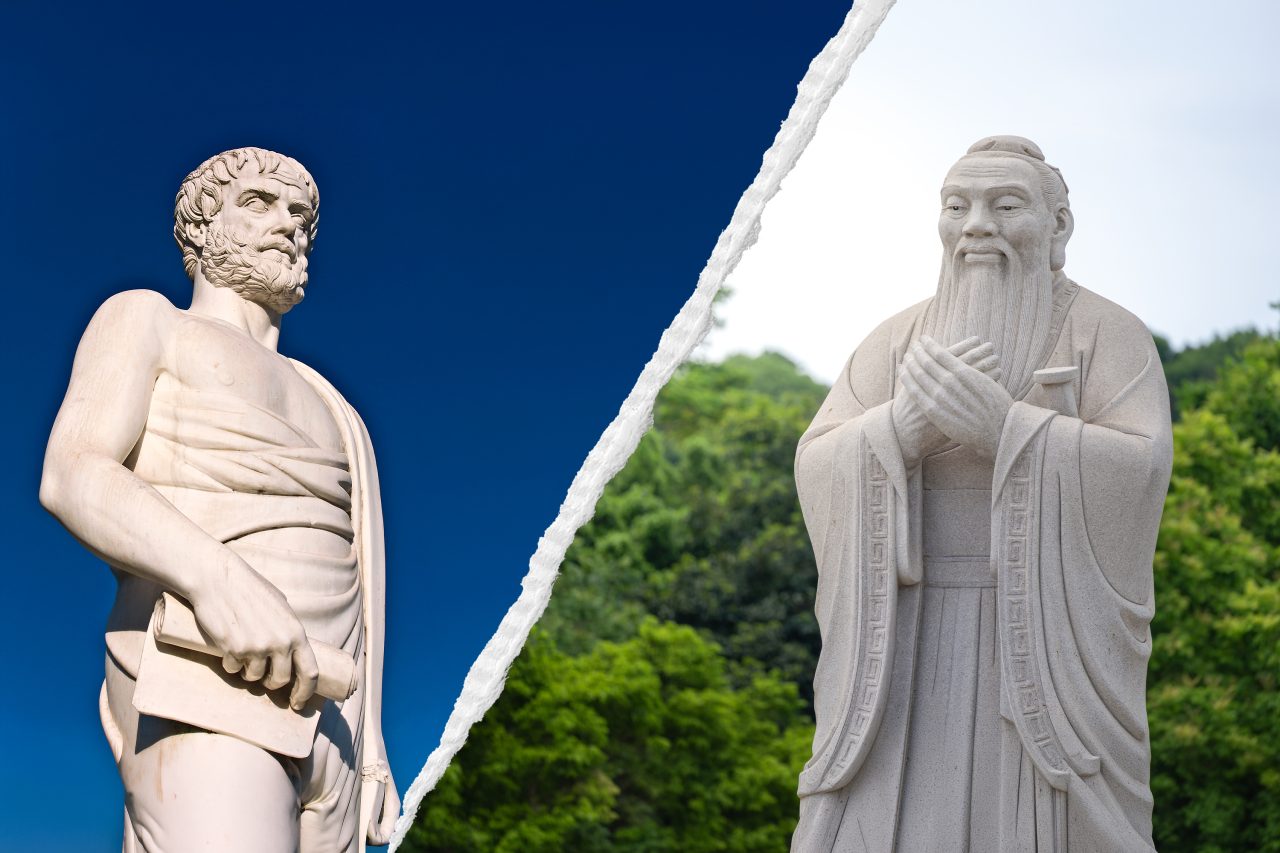
Statuer av Aristoteles og Konfucius side om side, delt av en visuell linje
Sources
- Stanford Encyclopedia of Philosophy – Aristotle’s Ethicshttps://plato.stanford.edu/entries/aristotle-ethics/
- Internet Encyclopedia of Philosophy – Aristotlehttps://iep.utm.edu/aristotle/
- Aristotle & Virtue Theory: Crash Course Philosophy #38https://www.youtube.com/watch?v=PrvtOWEXDIQ&list=PL8dPuuaLjXtNgK6MZucdYldNkMybYIHKR&index=39
- Stanford Encyclopedia of Philosophy – Confuciushttps://plato.stanford.edu/entries/confucius/
- Encyclopaedia Britannica – Aristotlehttps://www.britannica.com/biography/Aristotle
Images and Video Rights
- Getty Images
- Getty Images
- Adobe Stock
- Getty Images
- Adobe Stock
- Adobe Stock
- Getty Images
- Getty Images
- Adobe Stock / Getty Images


