

Who was Aristotle?
Aristotle was an ancient Greek philosopher who lived over 2,300 years ago (384–322 BCE). He was born in Stagira, in northern Greece, and later moved to Athens to study with Plato. After his studies, Aristotle became a teacher and even taught Alexander the Great.
He was interested in many subjects, including science, nature, and how people think and behave. Aristotle believed that we learn by observing the world and through experience. He also taught that becoming a good person comes from practising good habits, such as being honest and kind.
His ideas still influence how we learn and think today.
What are some examples of good habits you can practise in your daily life, and how might they shape who you become?
If you want to learn more, watch this video:

1 / 2


Aristoteles-statuen i Stagira i Hellas
What did Aristotle believe?
Aristotle believed that the goal of life is to live well and become a good person. He called this eudaimonia, which means living a full and meaningful life. According to him, this happens when we develop virtues—good character traits like courage, kindness, and fairness.
Aristotle explained that virtues are built through habit. We learn them by doing, not just by thinking. He also introduced the idea of the “golden mean,” which means that virtue is usually found between two extremes. For example, courage is between cowardice and recklessness.
Example
Imagine speaking in class. Saying nothing because you are afraid is one extreme, and interrupting others all the time is another. Speaking respectfully and sharing your ideas shows confidence and balance.
Think about it
- Can you think of a situation where you had to find a balance between two extremes?
- Do you think it is always easy to know what the “right balance” is? Why or why not?
1 / 3

En turgåer strekker ut hånden for å hjelpe en venn med å klatre opp til toppen av fjellet
What was Aristotle’s goal in life?
Aristotle believed that the ultimate goal of life is eudaimonia, often translated as living well or flourishing.
This idea goes beyond simple happiness or having fun in the moment. Instead, it refers to building a life that is meaningful and fulfilling over time.
Aristotle thought that living well involves using reason, making thoughtful decisions, and developing as a person. It is about how you live day by day and the direction your life takes.
What feels good in the short term does not always lead to long-term well-being. Sometimes, the best choices require effort, patience, and responsibility.
Imagine this situation
You might have to choose between spending the evening watching videos or studying for an important test. Watching videos may feel good immediately, but studying can help you grow, achieve your goals, and feel proud later.
According to Aristotle, the second choice contributes more to living well.
So, let’s think about this…
- What is the difference between enjoying the moment and building a good life over time?
- Can you think of a time when a difficult choice helped you grow?
1 / 4

Tenåringer som lærer å spille instrumenter
Learning Through Experience
Aristotle believed that knowledge comes from experience. Instead of learning only through theory, he argued that we understand things better when we observe, practise, and reflect on what we do.
In this way, experience helps us improve our judgment and make better decisions. By trying things ourselves, we begin to understand what works and what does not. This process takes time and often includes mistakes, but these mistakes are an important part of learning
He also believed that learning is active. This means we are not just receiving information—we are testing it, using it, and adapting it to real situations. Over time, these experiences help us grow not only in knowledge, but also in confidence and independence.
Can you think of a mistake that helped you improve at something?
1 / 2

En gruppe studenter som arbeider med et studieprosjekt
Why Do Habits Matter?
Aristotle believed that habits play a key role in shaping who we are. According to him, we are not born with a fixed character. Instead, our character develops over time through the actions we repeat every day.
When we practise positive actions—such as being patient, honest, or responsible—these actions gradually become habits. Over time, they feel more natural and require less effort. In this way, habits help us act in consistent and thoughtful ways without having to rethink every decision.
Aristotle also believed that small, everyday choices matter. Even simple actions, when repeated often, can shape our behaviour and influence the kind of person we become. This means that change does not happen all at once, but step by step.
Imagine this
Imagine studying a little bit every day instead of leaving everything until the last minute. At first, it may feel difficult, but over time it becomes a routine. This habit can help you feel more prepared, less stressed, and more confident in your learning.
How do your daily habits influence your behaviour?
1 / 3

Tenåring som sitter på sengen med en bærbar PC
Using Reason to Make Good Choices
Aristotle believed that one of the most important human abilities is reason; the ability to think carefully and make thoughtful decisions. He argued that living well means not just reacting to situations, but reflecting on them and choosing wisely.
Using reason helps us consider different options and understand the possible consequences of our actions. It also allows us to control our impulses and emotions, especially in difficult situations. According to Aristotle, good decisions often come from taking a moment to think, rather than acting immediately.
Over time, practising this kind of thinking can help us make better and more balanced choices.
Imagine this
You have an important test, but your friends invite you to go out. You might feel tempted to go, but by using reason, you can think about your priorities and the consequences of your choice. Deciding to study first may help you feel more prepared and less stressed later.
How can emotions sometimes make decision-making more difficult?
1 / 3

En ettertenksom tenåring på jakt etter en løsning
What Does It Mean to Live a Good Life?
Aristotle believed that living a good life is about more than just feeling happy in the moment. It means building a life that is meaningful, balanced, and fulfilling over time.
According to Aristotle, a good life involves making thoughtful choices, developing as a person, and acting in ways that reflect your values. It is not always easy, because the best choices sometimes require effort, patience, and responsibility. However, these choices help you grow and create a stronger sense of purpose.
A good life is also connected to how we treat others and the relationships we build.
Think for yourself
What kinds of choices help create a meaningful life?
How do your relationships affect your idea of a good life?
1 / 2

En rekke elever som går sammen i parken
Why is Aristotle relevant today?
Aristotle encourages us to think about our actions, develop good habits, and reflect on the kind of person we want to become. Questions that are still important today.
In a world full of quick decisions, distractions, and social pressure, his emphasis on thinking carefully and acting with balance can guide us.
Let’s question ourselves!
On social media, it can be easy to react quickly or say things without thinking. Aristotle’s ideas remind us to pause, reflect, and choose our actions carefully, showing respect and responsibility.
How can Aristotle’s ideas help you make better choices today?
Why is it important to think before acting, especially online?
1 / 2

Portrett av en tenåring ved en mobilutstilling
Aristotle vs. Confucius
Aristotle and Confucius both believed that living a good life is about developing strong character. However, they approached this idea in different ways.
Aristotle focused on individual character and the importance of habits. He believed that we become good by practising virtues and finding balance in our actions.
Confucius, on the other hand, placed more emphasis on relationships, respect, and social harmony. He taught that being a good person means fulfilling your role in society and treating others with care.
Imagine this
Imagine helping at home. Aristotle would see this as building responsibility through habit. Confucius would emphasise respect for family and doing your duty within relationships.
Which approach do you find more helpful in your life?
1 / 2
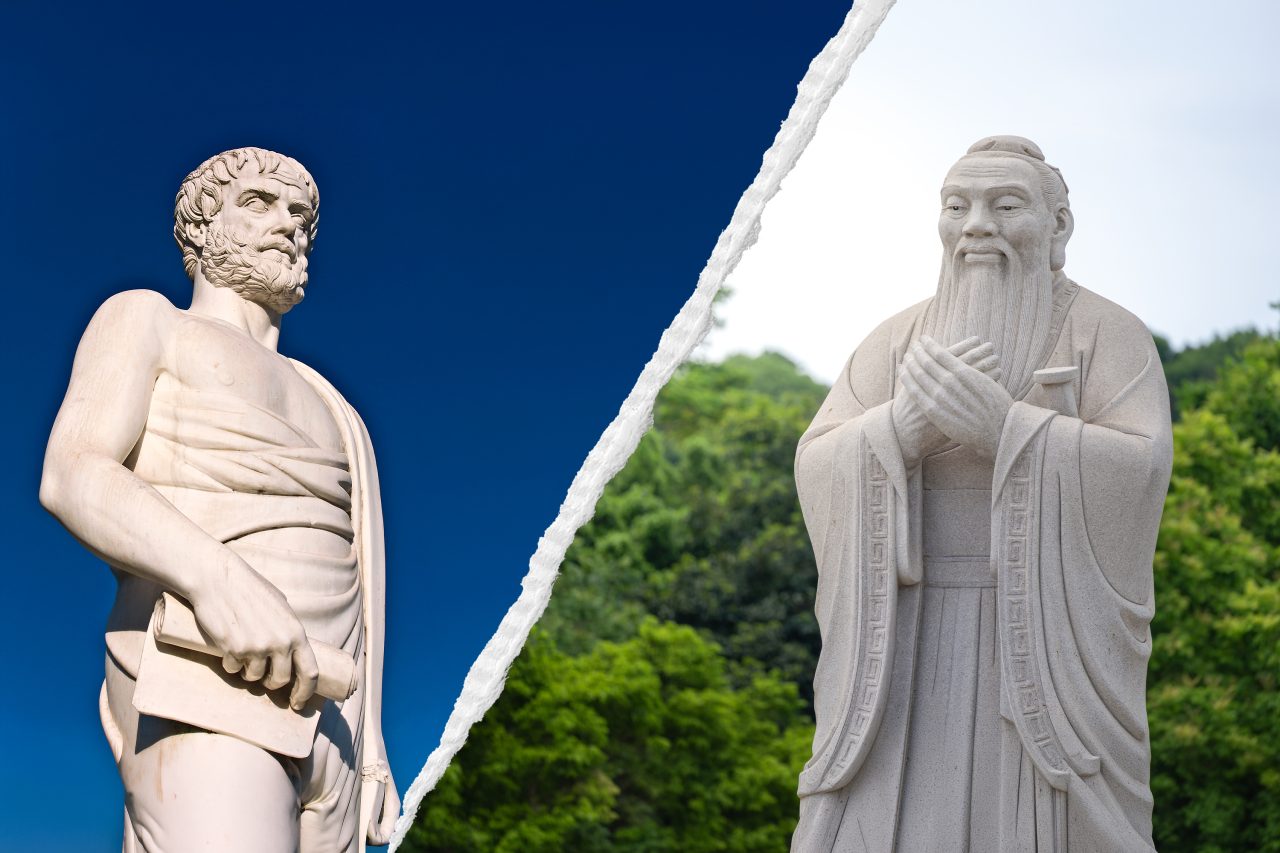
Statuer av Aristoteles og Konfucius side om side, delt av en visuell linje
Sources
- Stanford Encyclopedia of Philosophy – Aristotle’s Ethicshttps://plato.stanford.edu/entries/aristotle-ethics/
- Internet Encyclopedia of Philosophy – Aristotlehttps://iep.utm.edu/aristotle/
- Aristotle & Virtue Theory: Crash Course Philosophy #38https://www.youtube.com/watch?v=PrvtOWEXDIQ&list=PL8dPuuaLjXtNgK6MZucdYldNkMybYIHKR&index=39
- Stanford Encyclopedia of Philosophy – Confuciushttps://plato.stanford.edu/entries/confucius/
- Encyclopaedia Britannica – Aristotlehttps://www.britannica.com/biography/Aristotle
Image and Video Rights
- Getty Images
- Getty Images
- Adobe Stock
- Getty Images
- Adobe Stock
- Adobe Stock
- Getty Images
- Getty Images
- Adobe Stock / Getty Images


