

Who was Immanuel Kant?
Immanuel Kant lived in Germany in the 18th century, in a period when many people were interested in reason, science, and how we understand the world. He wanted to find out whether there are universal principles for how we should act – rules that apply to everyone.
For Kant, it was important that we use reason when making decisions. He believed that we should not be guided only by emotions or by what gives the best results, but that we must think carefully about what is actually right to do.
Maybe you can recognize this? Sometimes we know what is right, but still choose what feels easiest in the moment.
What about you? Do you always make decisions based on reason, or do you sometimes let emotions guide you?

1 / 2


Statue av Immanuel Kant
What did Kant believe?
Kant believed that we should act according to principles that can apply to everyone. This way of thinking is called duty ethics. To decide what is right, he asked an important question:
Can what I am doing become a rule for everyone?
If the answer is no, Kant believed the action is wrong.
You might think this sounds quite strict. It means that we must follow the same rules all the time, even when it is difficult.
Example: Lying
Imagine that you are thinking about lying to get out of something. With Kant’s way of thinking, you must ask:
What would happen if everyone lied in situations like this?
Then people would no longer be able to trust each other. That is why Kant believed it is wrong to lie, no matter what.
But is it really that simple?
What do you think?
Is it always wrong to lie?
What if you lie to protect a friend?
Should we always follow rules?
You might start to wonder: Do we always have to follow rules, no matter what happens?
Kant’s ideas can be compared to situations like the military, where it is important to follow orders. This makes it clear what to do, even in difficult situations, and the leader carries the responsibility.
At the same time, it is not always that simple. People also need to think for themselves and consider what is right. It is not always enough to just follow a rule or an order. Think, for example, about World War II.
What do you think?
Should we always follow rules, or are there situations where we need to think for ourselves?
1 / 3

Illustrasjon av en person ved en vekt på en murkant, med fjell i bakgrunnen og myke grønntoner
Using other people
Another important idea in Immanuel Kant’s ethics is that we should never use other people just to achieve something for ourselves. He believed that all people have value in themselves and should be treated with respect – not only as a way to reach our own goals.
This may sound obvious, but we might do it more often than we think.
Imagine this situation:
You are working in a group, but you let the others do most of the work because you know you will get the same grade anyway.
Are you using the others to get something for yourself?
Kant would say yes. When we let others do the work for us without contributing, we use them as a means.
What do you think?
Have you experienced something like this?
Where is the line between cooperation and using others?
1 / 2

Studenter som sitter sammen ved et bord med bøker og bærbare datamaskiner, gruppearbeid for å diskutere et prosjekt i klasserommet
What is good about Kant’s way of thinking?
Kant’s ethics can be seen as both clear and fair. If everyone follows the same rules, there is less room to make exceptions just because it suits a particular situation.
This can make it easier to know what is right to do, even when choices are difficult.
Maybe you recognize the feeling that something is unfair when some people get away with breaking rules that others have to follow? Kant’s way of thinking tries to prevent this.
In addition, he emphasizes that all people should be treated with respect. No one should be used just to achieve something, because every person has value in themselves.
What do you think? Is it an advantage to have clear rules that apply to everyone?
1 / 2

Statuen av rettferdighetens gudinne
What can be difficult?
Kant’s ideas can be challenging in some situations. They provide clear rules, but life is not always so simple.
Imagine that you know where a friend is hiding. Someone asks you where the person is, and you understand that they intend to harm your friend.
What do you do?
Should you tell the truth because lying is wrong?
Or can you lie to protect someone you care about?
Kant would argue that you should not lie, because the rule against lying must apply to everyone, in all situations.
Perhaps this does not feel entirely right? Many people believe that it can be right to break rules in special situations, especially if it can prevent someone from being harmed.
We find similar dilemmas in more serious situations as well. In the military, people are usually expected to follow orders. At the same time, we know that people must also think for themselves and consider what is right. Those giving orders are not always fully informed.
Should we always follow rules, or are there situations where we should make an exception?
1 / 2

Trefigur av Pinocchio med lang nese som vokser
Kant and consequences
Kant focuses on rules and duties, while other philosophers focus more on what happens as a result of our actions. What are the consequences? John Stuart Mill is an example of such a philosopher.
Kant’s way of thinking is called duty ethics. The key question is:
Is this the right thing to do, no matter what happens?
Mill represents what we call consequentialism. He would instead ask:
What will be the result of what I do?
You may recognize both ways of thinking. Sometimes we follow rules because we believe they are right, while other times we focus on what will lead to the best outcome.
What do you think is most important – following rules, or creating good consequences?
1 / 2

Veiskilt med to piler merket “riktig” og “feil” som peker i motsatte retninger
Why is Kant relevant today?
Even though Immanuel Kant lived more than 200 years ago, his questions are still very relevant today.
We face similar choices all the time in our daily lives, whether it involves cheating on a test, what we share on social media, lying online, or how we treat other people. In these situations, we can ask ourselves the same question Kant was concerned with: are there rules we should never break?
Maybe you recognize the feeling that something is wrong, even if it is tempting to do it anyway. Kant’s philosophy encourages us to think about what is right, not only for ourselves, but for everyone.
Think for yourself
Are there situations where it might be right to break a rule? What is most important to you – following rules or considering consequences? Perhaps you have experienced a situation where it was difficult to do the right thing. Which way of thinking suits you best, and why?
1 / 2
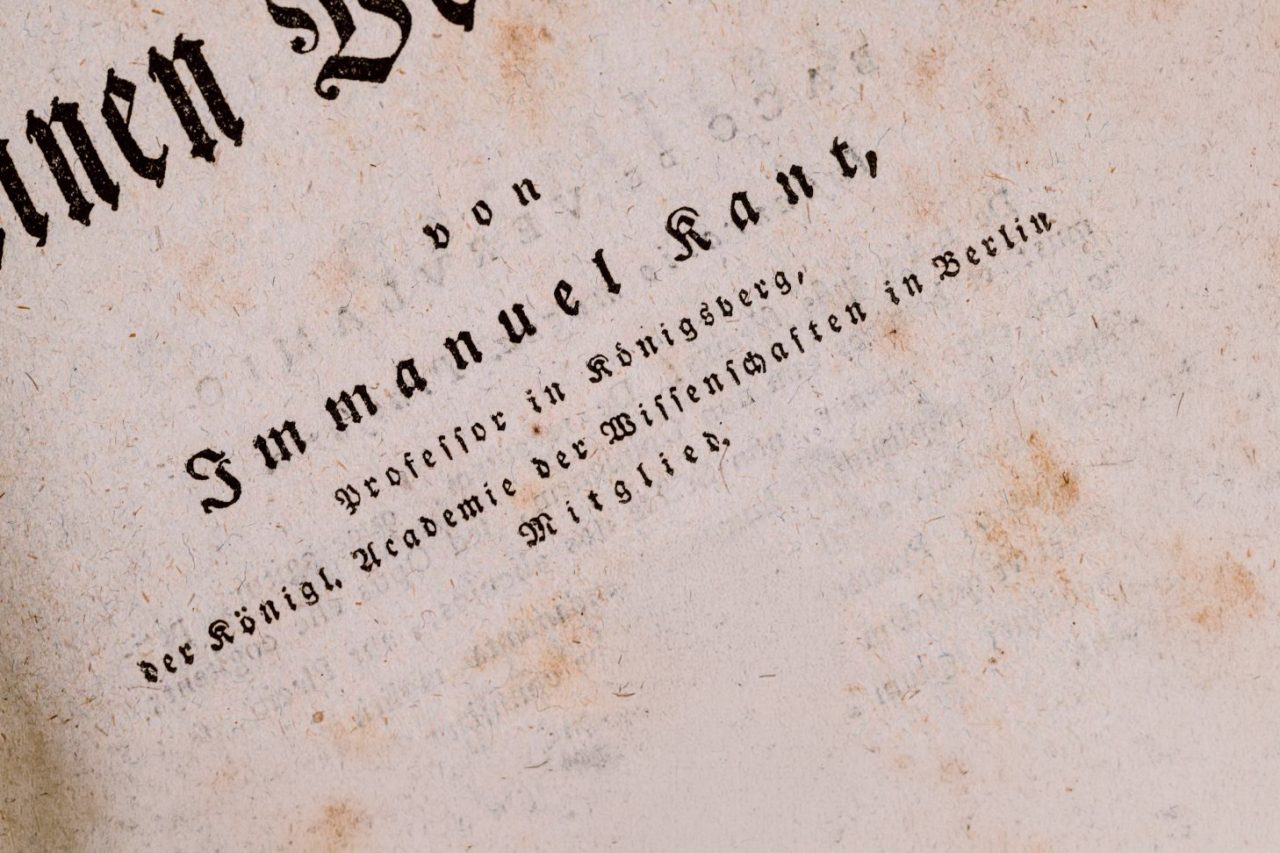
Nærbilde av gammel bokside med gotisk skrift og teksten “Immanuel Kant”.
Sources
- Store norske leksikon (SNL)l: Immanuel Kanthttps://snl.no/Immanuel_Kant
- Eriksen, 2002. Vestens store tenkere. De norske bokklubbene
- Filosofi.no Lastet ned 24.03.2025 fra: https://filosofi.no/immanuel-kant/
Image and Video Rights
- Adobe Stock
- Adobe Stock
- Adobe Stock
- Getty Images
- Getty Images
- Getty Images
- Adobe Stock


