

A struggle against injustice
At the beginning of the 20th century, India was ruled by Great Britain, something many people experienced as deeply unjust. The British held political power, controlled the economy, and did not treat the Indian population as equals. This created anger, frustration, and a strong desire for change.
Over time, resistance to colonial rule grew, but people disagreed about how the struggle should be carried out. Some believed that violence was necessary to win freedom. Others were uncertain whether new acts of violence could lead to a more just society.
It was in this situation that Mohandas Karamchand Gandhi emerged. He agreed that injustice had to be challenged, but he raised a fundamental ethical question:
If the goal is a just society, can unjust means be used to achieve it?
This question is not only about politics, but about ethics and about what is right and wrong to do, even when you yourself are treated unfairly.

1 / 2

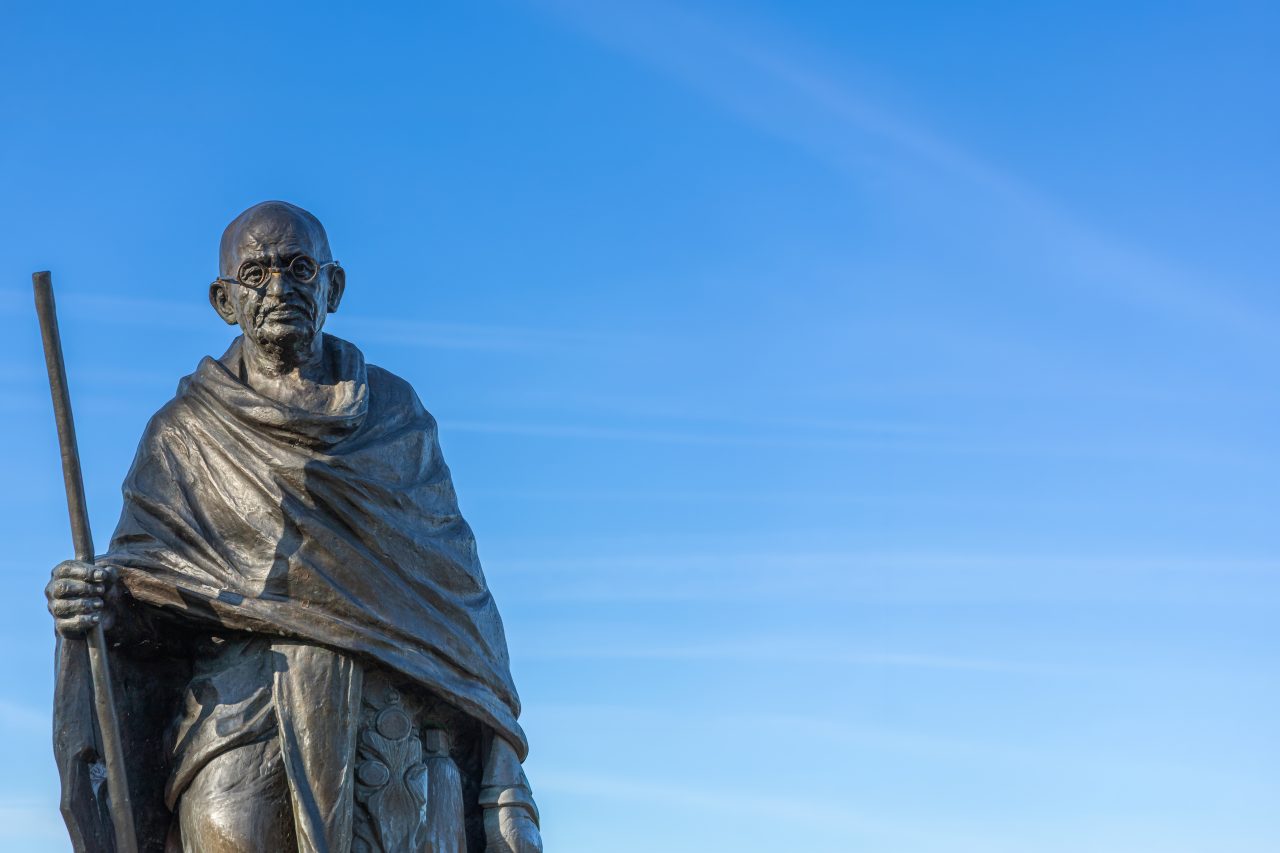
En statue av Mahatma Gandhi mot en klar blå himmel
A radical idea
Gandhi believed that means and ends are inseparably connected. If violence is used to create justice, there is a risk of continuing exactly what one is fighting against. Violence can lead to new abuses of power, new hierarchies, and new forms of oppression.
That is why Gandhi chose nonviolence as his path. He did not believe that nonviolence was easy or without cost. On the contrary, it required great self‑control, discipline, and a willingness to endure suffering without striking back.
This view was central to both Gandhi’s ethical and religious position. He was Hindu and inspired by the idea of ahimsa, which means not harming other living beings. This idea is especially important in Hinduism and Jainism, but is also found in other religions. For Gandhi, nonviolence was about respect for human beings, the belief that all life is sacred, and the commitment to act according to one’s conscience, even when it is difficult. To fight justly therefore meant living in accordance with one’s faith, not merely winning the struggle.
At the same time, important questions arise: Is it always possible to respond to injustice without using force? And is it right to expect people to endure violence without defending themselves?
1 / 2
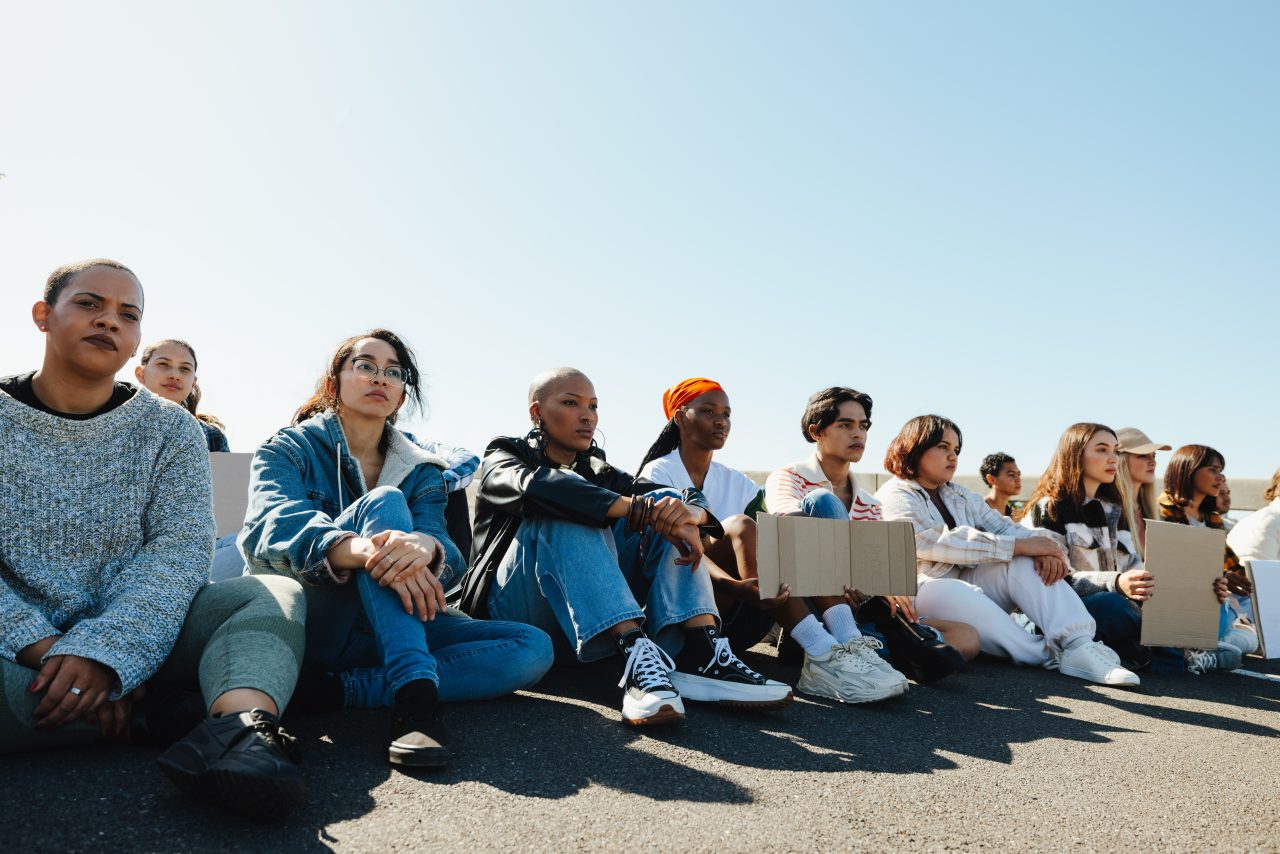
En gruppe unge voksne som sitter ned under en demonstrasjon
How do you mobilise an entire people?
What made Gandhi unique was not only what he believed, but how he managed to involve large numbers of people in the struggle against colonial rule. He did not primarily appeal to those in power, but to ordinary people: farmers, workers, women, and students.
Gandhi made resistance accessible by making participation simple. Weapons were not required, only the willingness to say no. He encouraged people to stop cooperating as long as laws and systems were unjust.
This is called civil disobedience: openly and deliberately breaking laws because one believes they are unjust. Gandhi believed that conscience must sometimes outweigh the law, because moral responsibility cannot be fully handed over to the state. We must follow our moral or religious convictions.
However, this strategy also raises an important question: Who has the right to break laws? And who should bear the consequences if the state responds with force?
1 / 2

Folk følger en leder
Resisting without striking back
Gandhi organised protests, marches, and boycotts in which participants were expected to remain calm and nonviolent, even when they were met with brutality. When peaceful people were beaten, imprisoned, or killed, it provoked strong reactions both in India and internationally.
This form of resistance pressured the British not only politically, but also morally. It made injustice visible to the entire world and forced people to take a position.
At the same time, this was a dangerous and risky strategy. Many people were injured, and some lost their lives. Not everyone agreed that it was right to sacrifice so much without fighting back. Some believed that Gandhi’s demand for nonviolence was too strict and unrealistic.
The salt march – breaking the law
One of the most famous examples of Gandhi’s method is the Salt March of 1930. The British had made it illegal for Indians to produce their own salt, and for Gandhi this became a symbol of a much larger issue: the right to control one’s own life.
He walked more than 300 kilometres to the coast, and more and more people joined him along the way. When he finally picked up a handful of salt, he broke the law openly and deliberately.
This was civil disobedience in practice. The action was simple, but the consequences were significant. At the same time, one may ask: Would such a symbolic act have had the same impact without the massive support Gandhi already had? And could everyone have used this form of resistance in the same way?
1 / 4
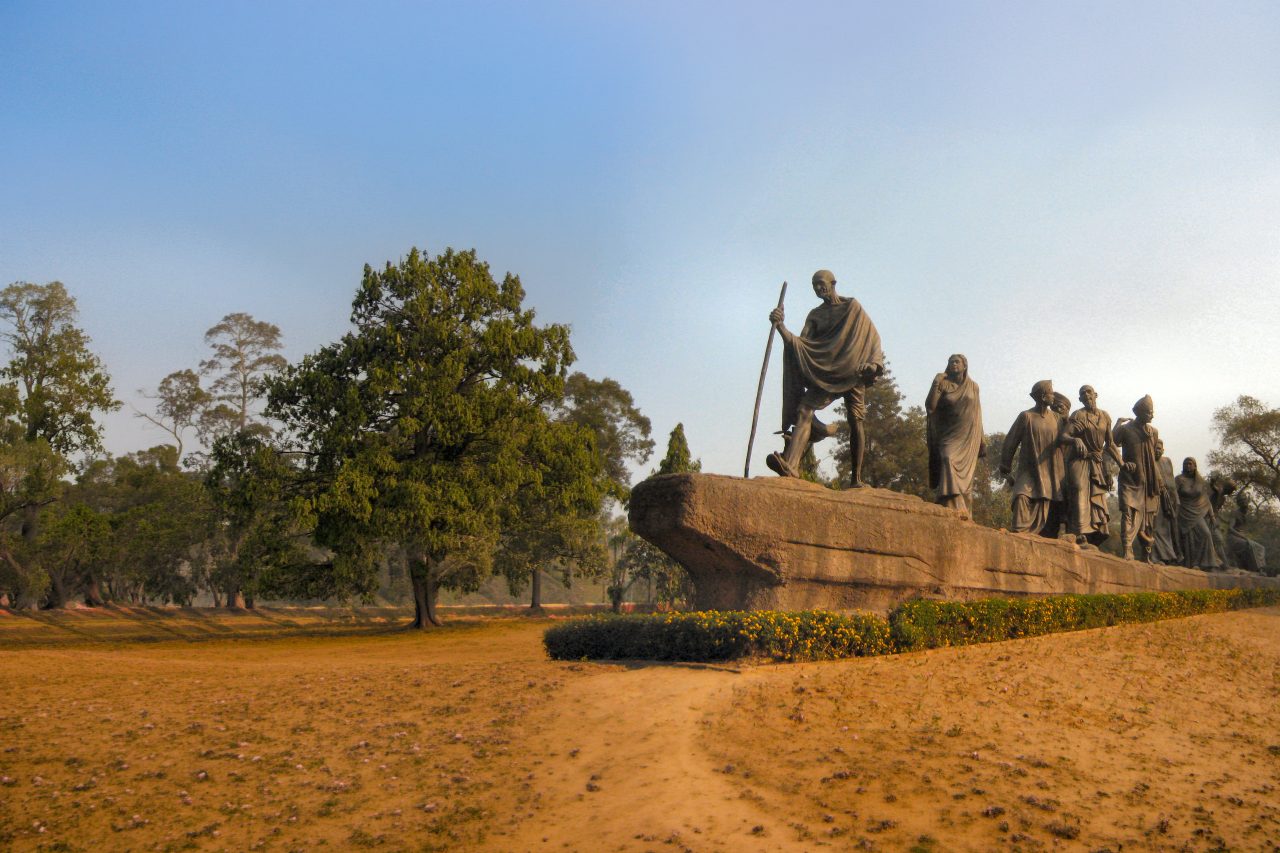
Statuer av Mahatma Gandhi og følgere under Saltmarsjen
Why did it work?
Nonviolence is often seen as weak, but in Gandhi’s case the strategy had powerful consequences. When peaceful people were met with violence, it became difficult for the British to present themselves as just.
At the same time, widespread civil disobedience made India almost impossible to govern. Laws lose their power when large parts of the population refuse to follow them.
Still, nonviolence alone was not the sole reason for India’s independence. After the Second World War, Great Britain was weakened, and international pressure increased. Historical change rarely happens for a single reason.
In 1947, India became independent.
1 / 2
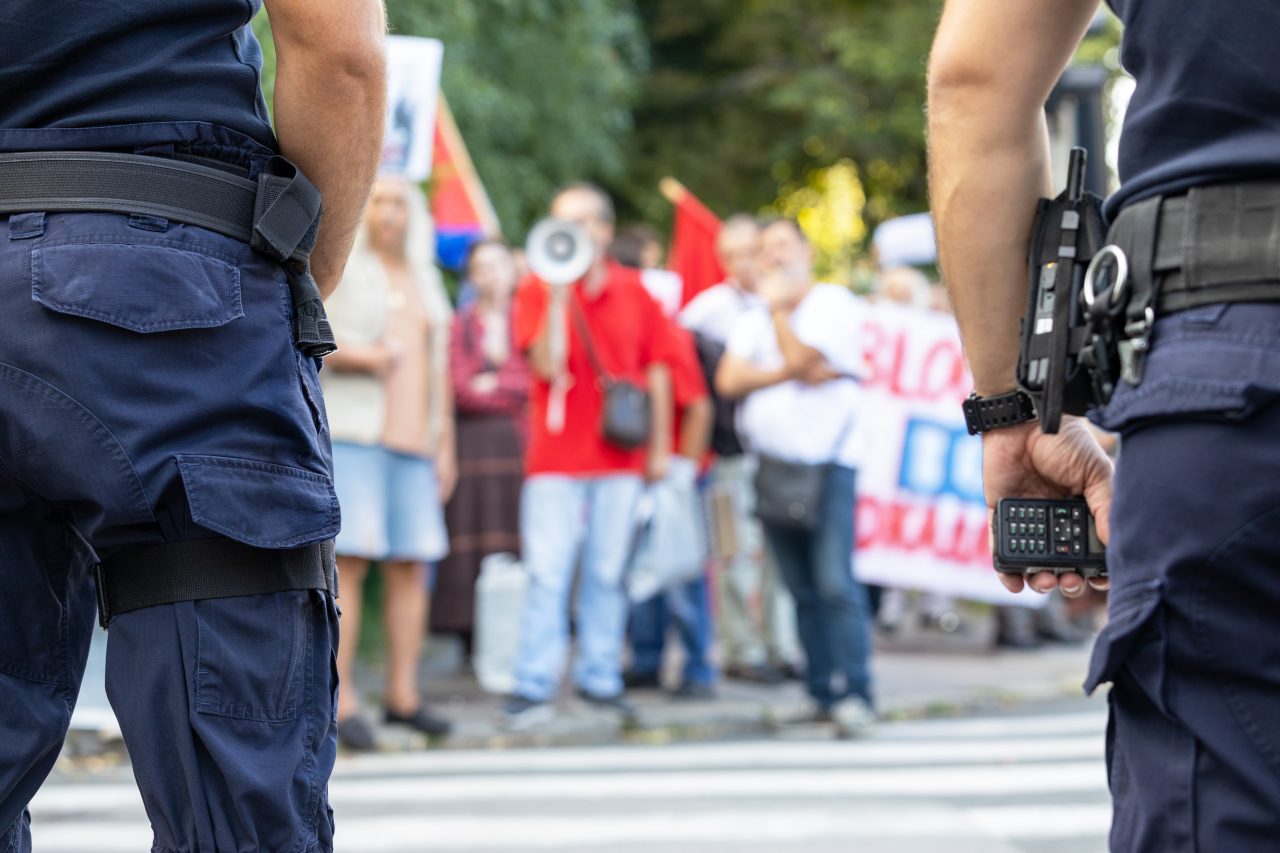
Politibetjent som overvåker en fredelig demonstrasjon
A difficult question
History does not end here, because Gandhi’s struggle leaves us with an ethical dilemma.
Was he right in claiming that violence can never lead to real peace and justice? Or are there situations in which violence is necessary to protect lives and stop serious abuse?
History offers no clear answers. During the Second World War, Nazism was defeated through armed force, which many believe was necessary. At the same time, violence has also led to new forms of injustice.
Nevertheless, Gandhi challenges us to think not only about what we are fighting for, but about how we fight.
1 / 2

En fredsdue som symboliserer frihet, med en olivengren i nebbet, kaster en skygge formet som en bombe
Not just history
The questions Gandhi raised are still relevant today. When people protest, some choose peaceful methods, while others believe stronger measures are necessary.
When Sami activists chain themselves in protest against environmental damage, or when young people refuse to attend school because they believe adults are not doing enough to protect the climate, the same questions arise.
Should we always follow the law? When is it right to break it? Which means can be justified? If the goal is good, are all means acceptable – and if not, where is the line, and who decides?
1 / 2

Person står på asfalt foran to gule piler som peker i motsatte retninger
A choice without easy answers
Gandhi does not give us a simple answer to how injustice should be challenged, but he offers an ethical starting point. He believed that people always carry responsibility for their actions, both when they follow rules and when they fight for something good. The goal cannot be separated from the means, because everything we do shapes both society and ourselves.
For Gandhi, this was not only a political strategy, but a religious and worldview‑based choice. He believed that true justice must be based on respect for all life, and that violence is never the path to lasting peace. Acting in accordance with one’s conscience was more important than winning quickly.
At the same time, these are demanding ideals. Not everyone is able to endure violence without striking back, and not every situation allows for peaceful solutions. This is why Gandhi’s views can be challenged – and this is precisely where ethics begins: when we must weigh values against each other.
You will probably never face an empire, but you will encounter injustice on a smaller scale. Then you face the same questions Gandhi did.
What are you willing to do for what you believe is right, and which lines will you not cross?
There are no easy answers, but there is responsibility. Ethics is about taking responsibility for the choices we make.
1 / 3

Veier som deler seg i den grønne skogen
Sources
- Store norske leksikon: Mahatma Gandhi https://snl.no/Mahatma_Gandhi
- Store norske leksikon: Ikkevold https://snl.no/ikkevold
- Store norske leksikon: Sivil ulydighet https://snl.no/sivil_ulydighet
- NDLA: Gandhi https://ndla.no/nb/r/religion-og-etikk/gandhi/279c96cbb7
- NRK: Syv ganger sivil ulydighet endret loven https://www.nrk.no/dokumentar/syv-ganger-sivil-ulydighet-endret-loven-1.14796489
Image and Video Rights
- Adobe Stock
- Adobe Stock
- Adobe Stock
- Wikipedia
- Adobe Stock
- Getty Images
- Adobe Stock
- Getty Images
Related Careers
Did you find this exciting to read? Here are some suggested careers you can explore:


