

A struggle against injustice
At the beginning of the 20th century, India was ruled by Great Britain. Many people experienced this as deeply unjust. The British controlled the country, took large parts of its resources, and did not treat the Indian population as equals. Over time, resistance grew, and many Indians wanted freedom and the right to own their own land. More and more people began to believe that the only way to gain freedom was to fight back with violence.
It was in this situation that the lawyer Gandhi stepped forward. He agreed that change was necessary, but he asked a question that would have far‑reaching consequences: If the goal is a just society, can we use unjust means to achieve it?

1 / 2

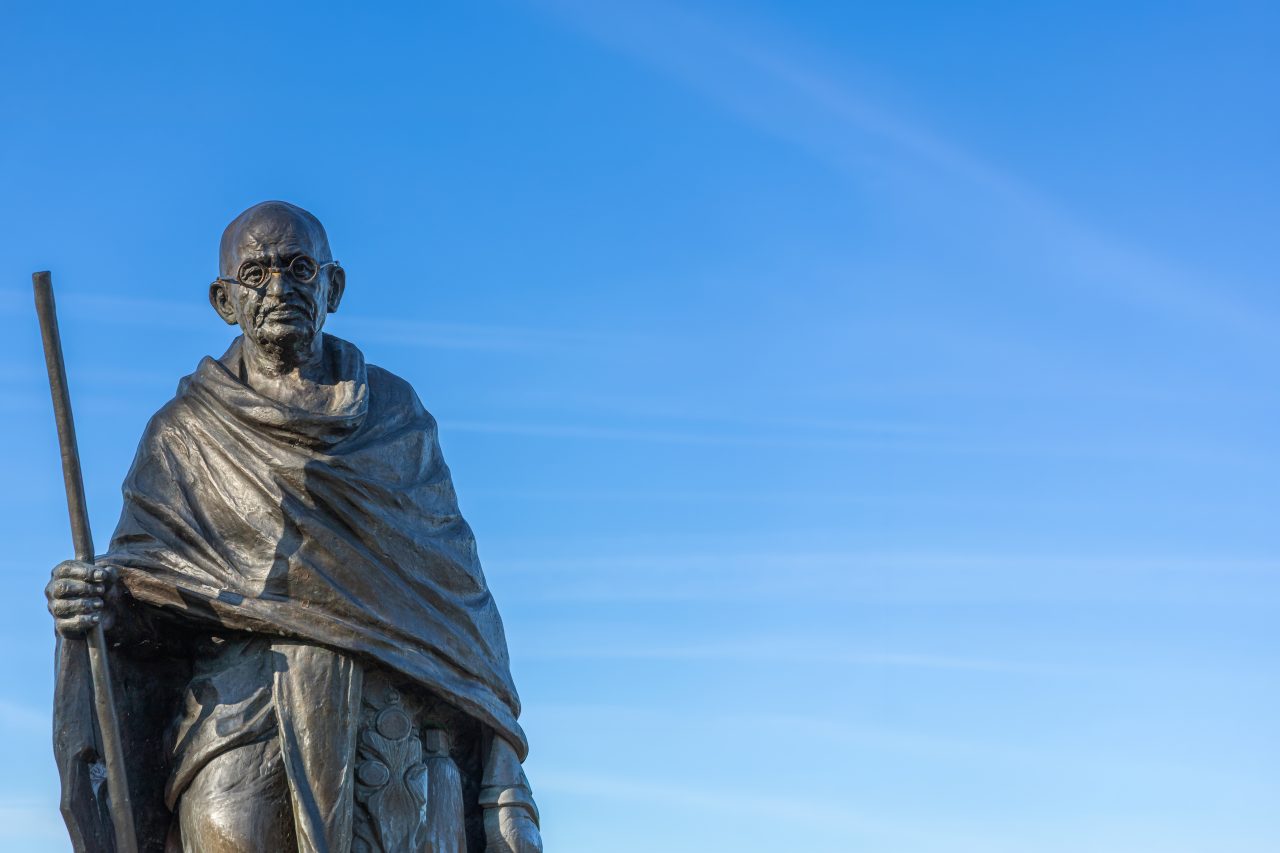
En statue av Mahatma Gandhi mot en klar blå himmel
A radical idea
Gandhi believed that means and ends are closely connected. If violence is used to create a just society, there is a risk of continuing exactly what one is fighting against. Violence easily creates more violence, and power may simply change hands without society becoming truly better.
Gandhi was also a Hindu, and according to his faith the ideal of ahimsa is central. Ahimsa means not harming living beings. This is why he chose nonviolence as his path. Not because he believed the struggle would be easy, but because he believed it was the only way to create real change.
This was a radical idea. What do you do when you face injustice? How do you fight without causing harm?
1 / 2
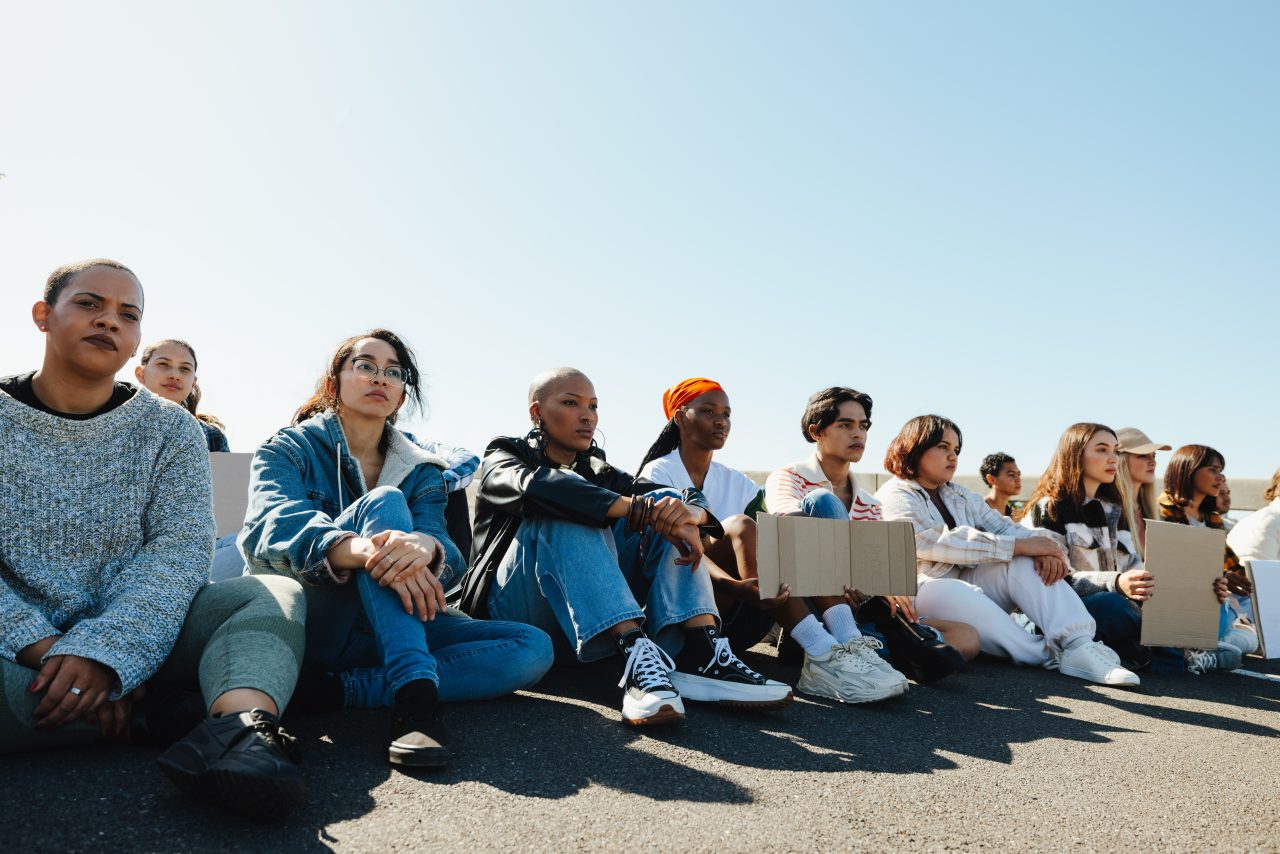
En gruppe unge voksne som sitter ned under en demonstrasjon
How do you mobilise an entire people?
What made Gandhi special was not only what he believed, but how he managed to involve the rest of the population in the struggle against British colonial rule. He did not mainly speak to politicians, but to ordinary people. Farmers, workers, women, and students were invited to take part in the struggle.
The key point was this: they did not need weapons to participate. Gandhi encouraged people to do something that seemed simple, but had major consequences. He asked them not to cooperate and to follow their religious beliefs and personal convictions.
People stopped buying British goods. They stopped paying certain taxes. They stopped following laws they believed were unjust. When enough people do the same thing, the system begins to weaken.
An empire only works as long as people follow the rules. Gandhi encouraged people to stop.
1 / 3

Folk følger en leder
Resisting without striking back
Gandhi organised protests, marches, and boycotts. He encouraged people to resist calmly but firmly, without using violence. These peaceful actions attracted attention far beyond India. When thousands of unarmed people marched and were still met with violence, it caused strong reactions.
Newspapers wrote about it. Images and stories spread. And in Great Britain, ordinary people began to ask questions: Was this right?
In this way, Gandhi did not only pressure those in power politically, but also morally. He made injustice visible.
The salt march – breaking a law
One of the most well‑known examples is the Salt March of 1930. The British had made it illegal for Indians to produce their own salt. For many, this seemed like a small issue, but for Gandhi it represented something much bigger: the right to control one’s own life.
He walked more than 300 kilometres to the coast. Along the way, more and more people joined him. When he finally bent down and picked up a handful of salt, it was a simple act, but it had enormous meaning. Suddenly, it was not just a law being broken. An entire system was being challenged.
This type of action is called civil disobedience. It means deliberately and openly breaking laws because you believe they are unjust.
1 / 2
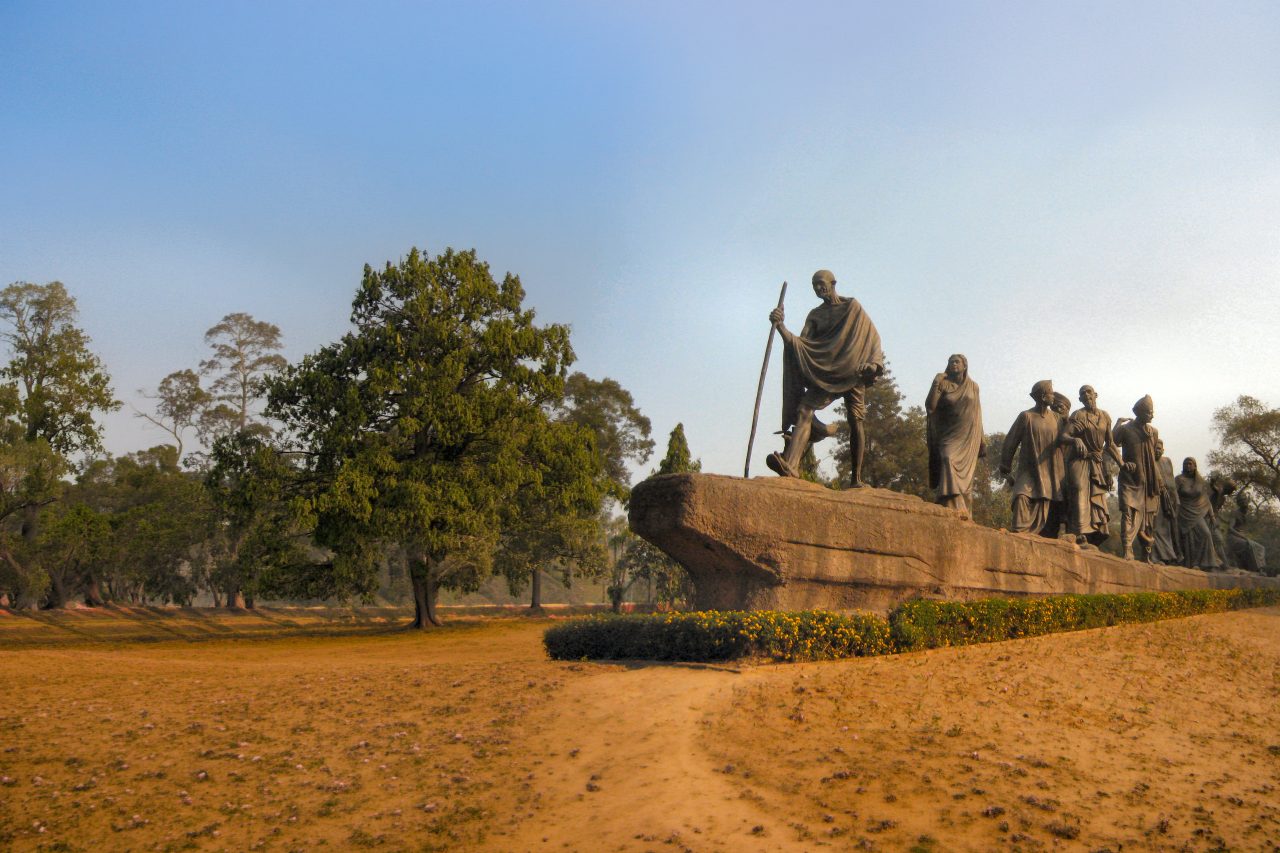
Statuer av Mahatma Gandhi og følgere under Saltmarsjen
Why did it work?
Nonviolence is often seen as weak. Still, Gandhi’s strategy had very powerful effects.
First, it became difficult for the British to respond with force without appearing brutal. When peaceful people are met with violence, it looks very different than when two sides fight each other.
Second, it became almost impossible to govern India. When millions of people refuse to cooperate, society slows down. Laws lose their power when no one follows them.
At the same time, things were changing outside India. After the Second World War, Great Britain was weakened, and the pressure for independence increased. India could no longer be controlled in the same way.
In 1947, India became independent.
1 / 2
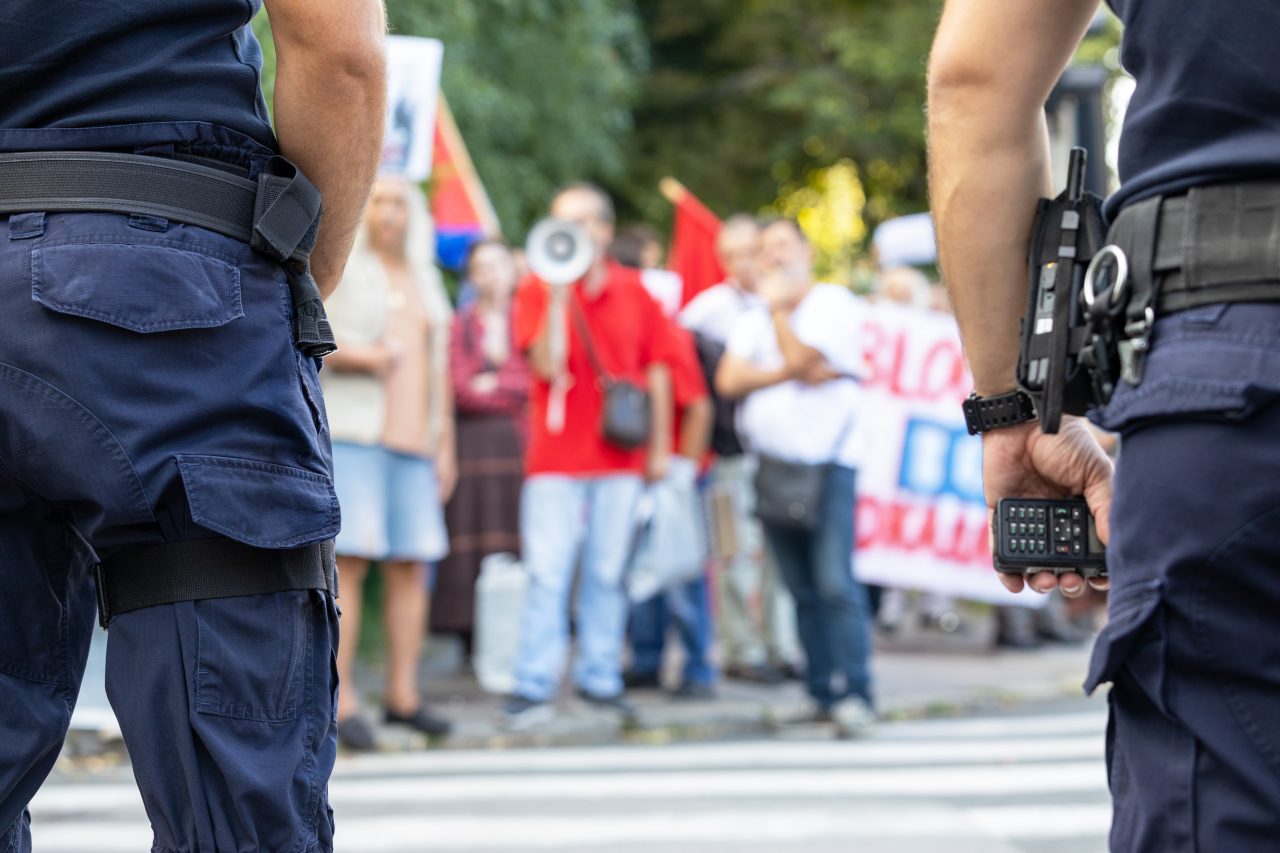
Politibetjent som overvåker en fredelig demonstrasjon
A difficult question
But the story does not end here. Gandhi does not only give us an example; he also leaves us with a dilemma.
Would India have become free without the pressure he created? And what about other countries? In many parts of the world, people have fought for freedom through war and violence. During the Second World War, dictatorships were defeated with weapons, not peaceful protests.
This makes the question more difficult, not easier.
Was Gandhi right in saying that violence can never lead to real justice? Or are there situations where violence is necessary?

En fredsdue som symboliserer frihet, med en olivengren i nebbet, kaster en skygge formet som en bombe
Not just history
Even though Gandhi lived long ago, we still face similar questions today. When people protest against what they see as injustice, some choose peaceful methods, while others believe stronger measures are necessary.
When Sami activists fight against damage to nature and culture, or when students strike for the climate, the boundaries between what is legal and what feels right are challenged.
Then the same questions appear again: Should we always follow the rules? Are there situations where it is right to break them? If the goal is good, are all means acceptable? Or does the way we fight also matter?
1 / 2

Person står på asfalt foran to gule piler som peker i motsatte retninger
A choice without easy answers
Gandhi does not give us a clear answer, but he gives us a direction to think in.
He reminds us that it is not enough to ask what we want to achieve. We must also ask how we act to achieve it, because the way we act helps shape the world we live in.
This may be why his story is still important today. You will probably not have to fight an empire in your life, but you will face injustice on a smaller scale. Then you face the same question Gandhi did.
What do you do? Do you follow rules even when they are unjust, or do you break them? And if you choose to break them, how do you do it?
There are no right answers, but there are many choices. And that is where ethics begins. It is not only about what we think and believe, but about what we do in practice.
Do we fight back using the same methods, or do we try, as Gandhi did, to find a different path?
1 / 3

Veier som deler seg i den grønne skogen
Sources
- Store norske leksikon: Mahatma Gandhi https://snl.no/Mahatma_Gandhi
- Store norske leksikon: Ikkevold https://snl.no/ikkevold
- Store norske leksikon: Sivil ulydighet https://snl.no/sivil_ulydighet
- NDLA: Gandhi https://ndla.no/nb/r/religion-og-etikk/gandhi/279c96cbb7
- NRK: Syv ganger sivil ulydighet endret loven https://www.nrk.no/dokumentar/syv-ganger-sivil-ulydighet-endret-loven-1.14796489
Image and Video Rights
- Adobe Stock
- Adobe Stock
- Adobe Stock
- Wikipedia
- Adobe Stock
- Getty Images
- Adobe Stock
- Getty Images
Related Careers
Did you find this exciting to read? Here are some suggested careers you can explore:


