

Religious Freedom
You have the right to choose what you want to believe in, or not to believe at all. Religious freedom is a human right that applies to everyone. In Norway, this right is also written into the Constitution, which contains the most important rules about how the country is governed and what rights we have.
But it has not always been like this, and in many parts of the world people do not have religious freedom. In some countries, it is forbidden to change religion or to choose not to believe. People can be punished by the authorities because they belong to the “wrong” religion, or because they do not follow the religion the state expects.
In some countries, religion is strictly controlled by the state. Only certain religious groups are allowed, and the authorities decide how religion can be practiced. People who belong to unofficial religious communities may be monitored or punished.
In other countries, only a few religions are approved by the state. Other religious groups are not allowed to gather, and many believers have been imprisoned because they practice their faith.
Religious freedom also has limits. We cannot do whatever we want in the name of religion. In this text, we will explore what religious freedom means.
This shows that a lack of religious freedom can look very different:
In some places, the state bans religion, in others the state controls religion, and in some places religious minorities are not protected.

1 / 3

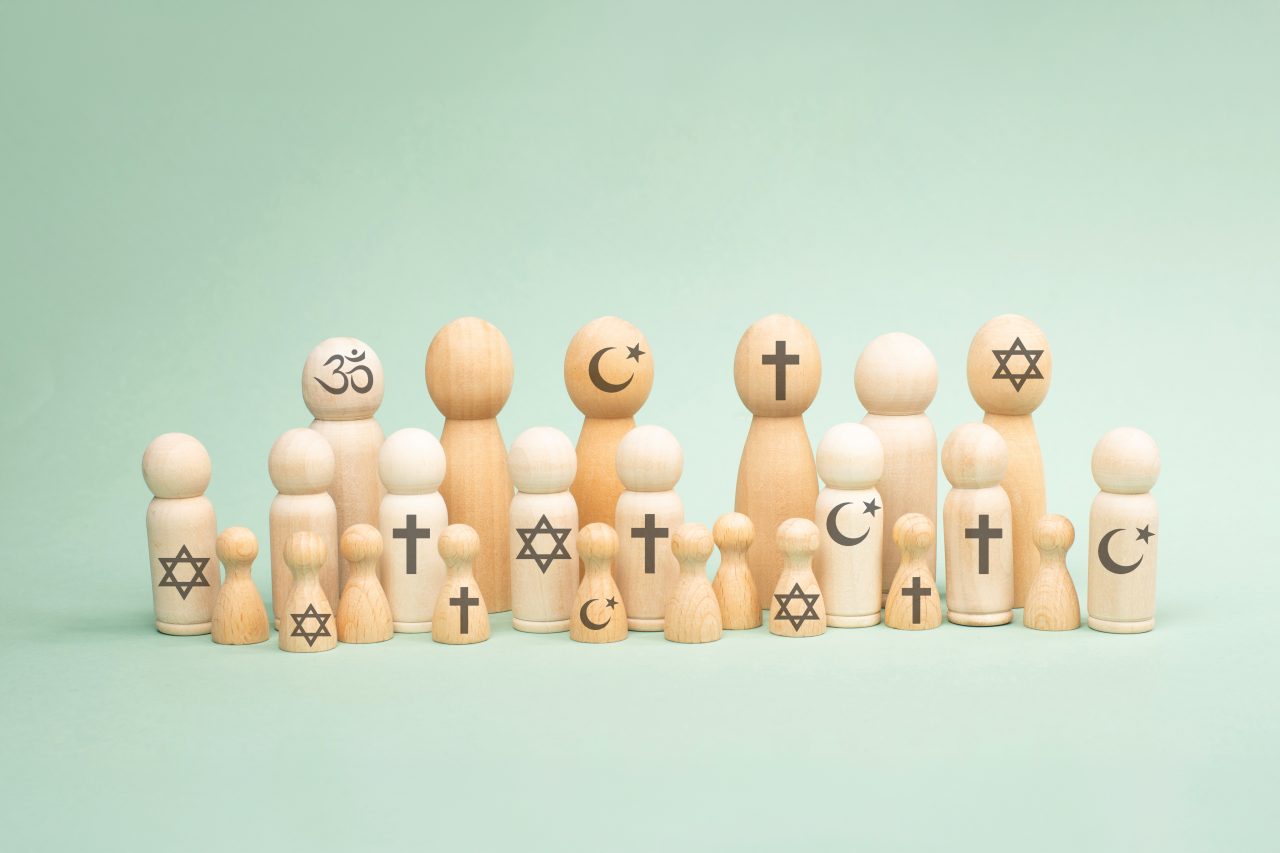
Trefigurer med symboler fra ulike religioner, som kors, halvmåne, davidsstjerne og om-tegn
What is religious freedom?
Religious freedom is also called freedom of belief and worldview. A worldview is a way of understanding life and the world. It can be religious, such as Christianity or Islam, or non-religious, such as humanism. Religious freedom means that you have the right to choose what you want to believe in.
You also have the right to practice your beliefs alone or together with others. This can include praying together, taking part in rituals, reading sacred texts together, celebrating holidays and traditions, or doing other things that are important to your faith. At school, this can mean, for example, that some students pray during breaks, celebrate different holidays than Christmas, or choose not to take part in certain activities for religious reasons.
You also have the right to change your religion or belief, and to not belong to any religion. This means that you should not be pressured to believe, and not pressured to stop believing.
1 / 3

En krystallkule ligger på et teppe av grønt gress
What can religious freedom look like in everyday life?
Religious freedom is not only about laws and big ideas. It can be seen in small choices in everyday life.
In a class, some students may celebrate different holidays than you, fast for a period of time, pray in a certain way, or follow rules about food. Some wear religious symbols or clothing, while others do not. Some go to church or a mosque, while others never do, and some are not allowed to celebrate birthdays or holidays that are important to you.
Religious freedom means that such differences should be allowed, without anyone being pressured, teased, or left out.
Reflection:
What can you do to help everyone feel safe when someone in your class does something different from you?
1 / 2

Elever med ulik etnisk bakgrunn i klasserommet
You can show your beliefs – or not
How you choose to live with your beliefs is up to you. This applies whether you believe in God, Allah, Yahweh, Brahma, Vishnu, follow the teachings of Buddha, believe in Norse gods like Odin and Thor, or believe in forces and magic in nature.
You can choose whether you want to wear religious clothing or symbols, such as a cross, hijab, or kippah—or not.
You can choose to follow rules from sacred texts, such as the Bible, the Quran, the Talmud, or the Vedas—or not. You can pray together with others in a place of worship, you can pray at home, or you can choose not to pray.
In everyday life, religious freedom can, for example, be about what you eat in the cafeteria, whether you fast for a period of time, or which holidays you celebrate. Religious freedom means that it should be allowed to make such choices without being teased or left out.
1 / 2
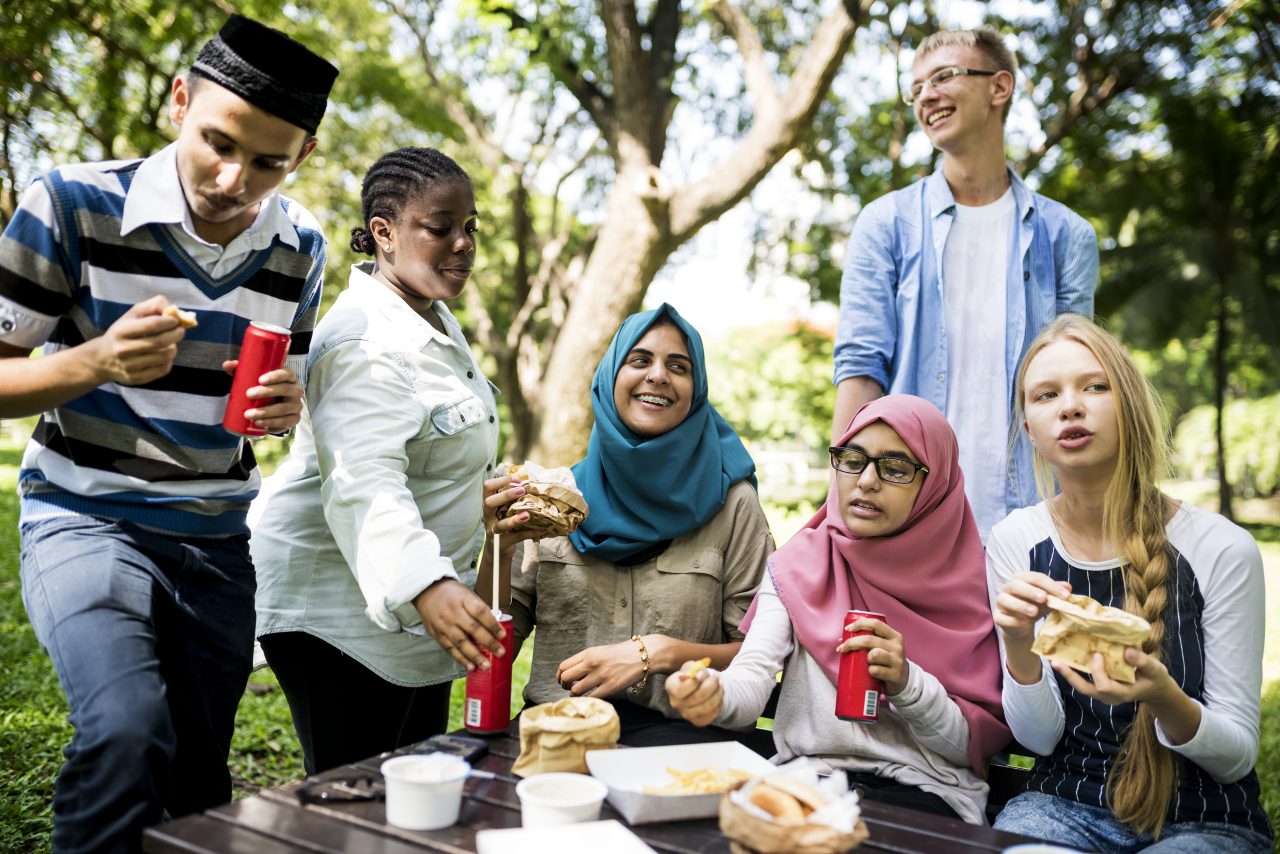
En gruppe studenter med ulik bakgrunn spiser lunsj sammen
Changing your religion is also allowed
You can change from one religion to another, or change direction within a religion.
Changing direction within the same religion can, for example, mean that a Christian changes denomination, such as from a Pentecostal church to a free church or the Church of Norway. It can also mean that a Muslim changes from Shia to Sunni. In many religions, there are different traditions and ways of practicing, even though people still belong to the same religion.
For some people, it is easy to change their religion or direction. For others, it can be difficult, because beliefs and traditions are often closely connected to family and a sense of belonging. That is why the right to choose for yourself is important.
The same religion – different directions
1 / 2
En ung kvinne som sitter på setet ved vinduet og ser ut
Religious Freedom is a Human Right
Religious freedom is a human right. Article 18 of the United Nations Universal Declaration of Human Rights states:
“Everyone has the right to freedom of thought, conscience and religion. This right includes freedom to change his religion or belief, and freedom, either alone or in community with others and in public or private, to manifest his religion or belief in teaching, practice, worship and observance.” (1948)
This means that you have the right both to believe what you want inside yourself and to express your beliefs through actions, either alone or together with others.
When something is a human right, it means we have it simply because we are human. No one is allowed to take this right away from us.
Religious freedom is also included in the United Nations Convention on the Rights of the Child, Article 14:
“All children have the right to think and believe what they want. Parents have the right to guide them.” (1989)
1 / 3
Mange forskjellige menneskefigurer laget av papir
Why is religious freedom important?
Being able to believe what you want is important for the right to have your own opinions. For many people, religion and worldview are also about identity—who you are, what gives life meaning, and which values you try to live by.
Being able to express your beliefs, for example through rituals, clothing, or food, can be important for feeling a sense of belonging. When people are allowed to be different and are still treated with the same respect, it becomes easier for more people to feel part of a community.
In this way, religious freedom is connected to other important rights in a democracy.
1 / 2

En gruppe unge venner som sitter sammen og ler
Limits to religious freedom
Can you say and do anything just because you say it is about religion? No, you cannot.
You are not allowed to harm or discriminate against others, no matter the reason. Society cannot decide what you think, but the law decides how we are allowed to treat other people.
This means, for example, that religion can never be used as an excuse for bullying, threats, or exclusion. We are free to believe and think what we want, but we are not free to do whatever we want.

Kvinne som lager et stoppskilt med hånden
Do everyone have religious freedom?
In some countries, it is forbidden to change religion or to choose not to believe. People can be threatened, punished, or excluded because they believe differently from what is expected. This can mean, for example, that they are not allowed to go to school, lose contact with their family, or are put in prison.
In such cases, people do not have religious freedom, even if there are laws that say they do.
Religious freedom has also been violated in Norway. The Sami are an Indigenous people with their own traditions and religious practices. For a long time, Sami religion was forbidden, and many Sami were pressured to stop their rituals and beliefs.
When the Constitution was introduced in 1814, Christianity was the state religion, and several groups, such as Jews and Sami, were discriminated against or excluded. Later, these laws were changed, and today everyone in Norway has the right to believe what they want.
1 / 2

En alvorlig utseende gutt står i skolegangen. Bak ham står to klassekamerater
What about children’s religious freedom?
You might be wondering: Does religious freedom apply to children too?
Many children do what their family does. They celebrate holidays, eat certain foods, or follow religious traditions without having chosen it themselves. For example, a child may celebrate Christmas, Eid, or Diwali because it is part of the family’s traditions, or follow rules about food and fasting at home. Religion and culture are often closely connected, and for many children this feels safe and natural.
At the same time, children have the right to express their opinions. This means that children can share what they think and feel about beliefs and traditions. For example, if a child does not want to take part in prayer, a religious service, or other religious activities, they have the right to be listened to, even if they do not always get to decide.
As you grow older, your opinions should count more. In Norway, you can decide for yourself whether you want to belong to a religious community, change to another one, or leave one when you turn 15. Your parents can give advice and guidance, but the choice is yours.
1 / 3

Familie som feirer påskeferien sammen med bestemoren og barna
In summary
Religious freedom is about more than religion. It is about the right to think for yourself, to be different, and to live in a society where all people have equal value.
You can choose your beliefs, change your beliefs, or choose not to believe. At the same time, religious freedom always comes with responsibility: no one has the right to use religion as an excuse to harm others.

En gruppe studenter som går sammen i rekke med armene rundt hverandres skuldre
Sources
- https://lille.snl.no/tros-_og_livssynsfrihet
- https://snl.no/religionsfrihet
- https://www.ung.no/demokrati-og-valg/429_Retten_til_religionsfrihet.html
- https://fn.no/avtaler/menneskerettigheter/fns-verdenserklaering-om-menneskerettigheter
- https://fn.no/avtaler/menneskerettigheter/barnekonvensjonen
- https://www.norgeshistorie.no/grunnlov-og-ny-union/1316-religionstvang-ikke-religionsfrihet.html
- https://snl.no/J%C3%B8deparagrafen
- https://www.pewresearch.org/topic/religion/religious-freedom-restrictions/international-religious-freedom-restrictions/
Image and Video Rights
- Adobe Stock
- Adobe Stock
- Getty Images
- Getty Images
- Getty Images
- Adobe Stock
- Getty Images
- Adobe Stock
- Adobe Stock
- Adobe Stock
- Getty Images
