

Who was Confucius?
Confucius was a Chinese philosopher who lived between 551 and 479 BCE, during a period of political disorder. He was concerned with how harmony could be restored in society, not through strict laws, but through ethical behavior in everyday relationships.
He worked as a teacher and believed that moral development begins with the individual but is always expressed through interactions with others. His philosophy is considered relational because it places relationships—rather than isolated individuals—at the center of ethical life.
Confucius was a Chinese philosopher who lived between 551 and 479 BCE, during a period of political disorder. He was concerned with how harmony could be restored in society, not through strict laws, but through ethical behavior in everyday relationships.
He worked as a teacher and believed that moral development begins with the individual but is always expressed through interactions with others. His philosophy is considered relational because it places relationships—rather than isolated individuals—at the center of ethical life.
What do you think about this? Does focusing on relationships, rather than rules, change the way we think about being a good person?
Let’s see a video that helps us to understand better who this thinker was:

1 / 3

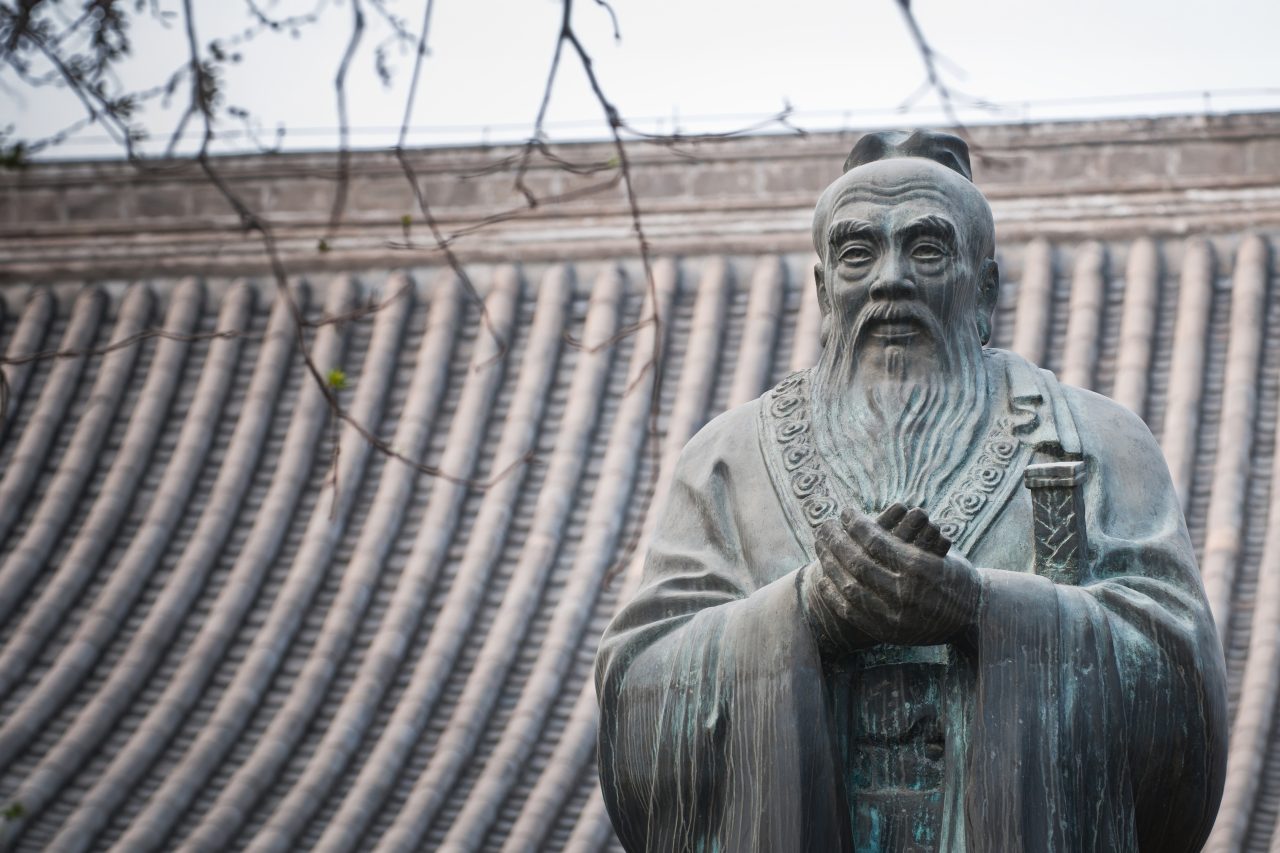
Statue av Konfucius
What is relational ethics in Confucius’ philosophy?
Relational ethics in Confucius’ philosophy is based on the idea that moral life is shaped through relationships rather than independent rules or individual choices alone. Instead of asking what is universally right, Confucius focused on how people should act within specific relationships, such as between parent and child or teacher and student.
These relationships involve different roles, but they are also reciprocal. Each person has responsibilities, and harmony is achieved when these are fulfilled with sincerity and care. Ethical behavior is therefore not abstract—it depends on context, roles, and mutual expectations.
This perspective challenges the idea that ethics is only about individual freedom. Instead, it emphasizes interdependence: who we are is shaped by how we relate to others. Relational ethics highlights the importance of empathy, awareness, and responsibility in social life.
Example:
Consider a situation where you strongly disagree with a teacher’s decision. From an individual perspective, you might focus only on expressing your opinion freely. However, Confucian relational ethics would encourage you to consider the nature of the relationship. As a student, you are expected to show respect, while the teacher has a responsibility to act fairly and listen.
A relational approach would involve expressing disagreement thoughtfully—choosing the right moment, using respectful language, and being open to dialogue.
Let’s reflect…
- How can you balance expressing your own opinion with maintaining respect in a relationship where there is a difference in roles or authority?
1 / 4

Lærer i samtale med en elev
Key concepts: ren, li, and xiao
Confucius’ relational ethics is grounded in key concepts that guide behavior. Ren refers to humaneness or compassion—the ability to care for others and act with empathy. It is the moral foundation of his philosophy. Li refers to proper conduct, including rituals, manners, and appropriate behavior in different social contexts. It gives structure to how respect is expressed.
Xiao, or filial piety, emphasizes the importance of family relationships, especially respect and care for parents and elders. For Confucius, the family is where ethical learning begins.
These ideas work together: ren provides the intention to care, li shows how to act, and xiao anchors these values in real relationships. Together, they show that ethics is not abstract, but lived through everyday interactions.
Imagine this situation:
You have an important commitment, but a family member asks for your help at the same time. You feel torn between your personal plans and your responsibility toward your family.
From a Confucian perspective, this situation involves balancing xiao (duty and respect toward family) with li (acting appropriately in the situation) and ren (showing care and understanding). A thoughtful response might involve explaining your situation respectfully, finding a compromise, or prioritizing based on the importance of the need.
Rather than applying a fixed rule, Confucian ethics encourages you to consider the relationship, the context, and the impact of your decision on others. The goal is to act in a way that maintains respect and harmony.
– How do you decide what the “right” action is when different responsibilities conflict?
1 / 4

Ung kvinne som støtter en eldre mann med stokk
Why are roles and responsibilities important?
In Confucian relational ethics, roles and responsibilities are essential for maintaining harmony. Each person has different roles—such as child, student, or friend—and each role includes certain expectations. Ethical behavior involves understanding these roles and acting appropriately within them.
Confucius believed that social problems often arise when people fail to fulfill their responsibilities. For example, if leaders act selfishly or individuals ignore their duties, trust breaks down. Therefore, moral development includes recognizing how one’s actions affect others.
Importantly, roles involve mutual responsibility. A parent must care for a child just as a child must show respect. This balance helps create stable and meaningful relationships. In this way, ethics is not just about individual choices, but about maintaining harmony within a network of relationships.
Example:
Imagine a classroom where students are expected to participate and the teacher is expected to guide them. If students do not engage, learning becomes difficult. If the teacher does not support them, students may feel lost. Confucius would see this as a failure in roles on both sides.
His philosophy emphasizes that responsibilities are connected—each person’s actions affect others. When both sides fulfill their roles with care and respect, the environment becomes more balanced and effective.
Let’s reflect:
Should you still fulfill your role if others are not fulfilling theirs? Why?
1 / 4

Elever i klasserommet som rekker opp hånden
Why is leading by example important?
Confucius believed that leadership is primarily moral rather than based on power or force. According to him, a good leader influences others through personal example rather than strict rules or punishment. When leaders act with integrity, fairness, and respect, others are more likely to follow their behavior.
This idea is closely connected to relational ethics. A leader’s actions shape the relationships within a group, whether in a family, classroom, or society. If a leader behaves irresponsibly or unfairly, it can weaken trust and create disorder.
Confucius argued that moral example has a powerful effect because it inspires voluntary respect rather than fear. This applies not only to political leaders but to anyone in a position of influence. In this sense, everyone can be a “leader” in their own context by modeling good behavior.
Imagine this…
Consider a situation in a workplace or classroom where a person in a leadership role consistently demonstrates fairness, responsibility, and respect. Instead of giving orders or correcting others harshly, they listen carefully, treat everyone equally, and take responsibility for their own mistakes. Over time, others begin to adopt similar behaviors—not because they are required to, but because they see these actions as effective and worthy of respect.
In contrast, if a leader behaves unfairly or irresponsibly, it can create distrust and encourage similar negative behavior in others.
What do you think? Can a good example be more powerful than rules or punishments? Why or why not?
1 / 4

En gruppe mennesker på fjelltopp som klatrer, noe som fremmer samarbeid
What is the “Junzi” (the ideal person)?
In Confucian philosophy, the junzi is the ideal moral person. Originally, the term referred to someone of noble status, but Confucius redefined it to mean a person of noble character rather than noble birth. A junzi is someone who constantly works on self-improvement, acts with integrity, and takes responsibility for their actions.
This person is guided by values such as respect, sincerity, and moral awareness. Importantly, the junzi does not act correctly only when being observed, but also when no one is watching. Becoming a junzi is not about perfection, but about continuous effort and reflection.
Confucius believed that anyone can strive to become a junzi through learning, practice, and self-discipline. This idea highlights that ethical development is a lifelong process shaped by conscious choices and habits.
Imagine you notice someone drop something without realizing. Even if no one else sees it, you choose to return it. This shows integrity and awareness.
Do you think being a good person depends more on actions or intentions? Why?
1 / 3

En lommebok i skinn som har falt på bakken, og en person som går sin vei
About self-reflection
Self-reflection is a central practice in Confucius’ philosophy. He believed that becoming a better person requires regularly examining one’s own thoughts, actions, and intentions. Instead of focusing only on what others do wrong, Confucius encouraged individuals to look inward and ask whether they are acting with integrity and responsibility.
This process of reflection helps people recognize their mistakes and improve over time. It also strengthens moral awareness, allowing individuals to act more thoughtfully in their relationships. For Confucius, ethical development is not automatic—it requires conscious effort and honesty with oneself.
Self-reflection is closely connected to personal growth. By learning from experience and correcting one’s behavior, a person moves closer to becoming a morally cultivated individual. In this sense, reflection is not about criticism, but about continuous improvement.
Consider a situation in which you strongly disagree with someone in a position of authority, such as a teacher or coach. During the interaction, you express your disagreement in a way that feels justified to you, perhaps focusing on defending your perspective without fully considering the tone or impact of your words.
Afterward, through self-reflection, you begin to analyze not only the situation but your own role in it. You may recognize that while your point was valid, your approach may have limited the possibility of a constructive dialogue. This reflection allows you to separate being “right” from acting wisely within a relationship. As a result, you might choose to revisit the conversation in a more thoughtful and respectful way, aiming for understanding rather than conflict.
- How can self-reflection help you balance expressing your opinions with maintaining respectful relationships?
1 / 4

En kvinne som sitter og skriver i en notatbok
Why is relational ethics important today?
Relational ethics remains highly relevant in today’s interconnected world. In a time shaped by digital communication and rapid interaction, Confucius’ emphasis on relationships offers important guidance.
His ideas encourage us to think about how our actions affect others, even in situations where we may not see immediate consequences, such as online communication. Acting with respect, awareness, and responsibility becomes essential in maintaining healthy relationships.
Confucius’ focus on mutual responsibility can also help address modern challenges in areas like leadership, education, and social life. By understanding ourselves as part of a network of relationships, we are better prepared to make thoughtful decisions and contribute to a more harmonious society.
When we think about how social media is used today, do you believe Confucius’ ideas can help improve the way people interact there?
1 / 3

En ung person som smiler mens han holder en smarttelefon
Confucius vs. Kant: Relationships or rules?
Confucius and Immanuel Kant offer two very different approaches to ethics. Confucius developed a relational ethics, where moral behavior depends on relationships, roles, and context. He believed that acting well means showing respect, fulfilling responsibilities, and maintaining harmony with others.
Kant, in contrast, argued that ethics should be based on universal rules that apply to everyone equally, regardless of the situation. His philosophy is based on the idea of duty: we should act according to principles that could be followed by all people. For Kant, the intention behind an action—doing the right thing because it is morally right—is what matters most.
While Confucius emphasizes flexibility, context, and relationships, Kant emphasizes consistency, rules, and equality. This creates an important contrast between adapting to situations and following universal principles.
Imagine telling the truth might hurt someone’s feelings. Confucius might suggest considering the relationship and responding carefully, while Kant would argue that telling the truth is always the right thing to do.
Do you think it is more important to follow universal rules or to adapt your actions depending on the situation?
1 / 3
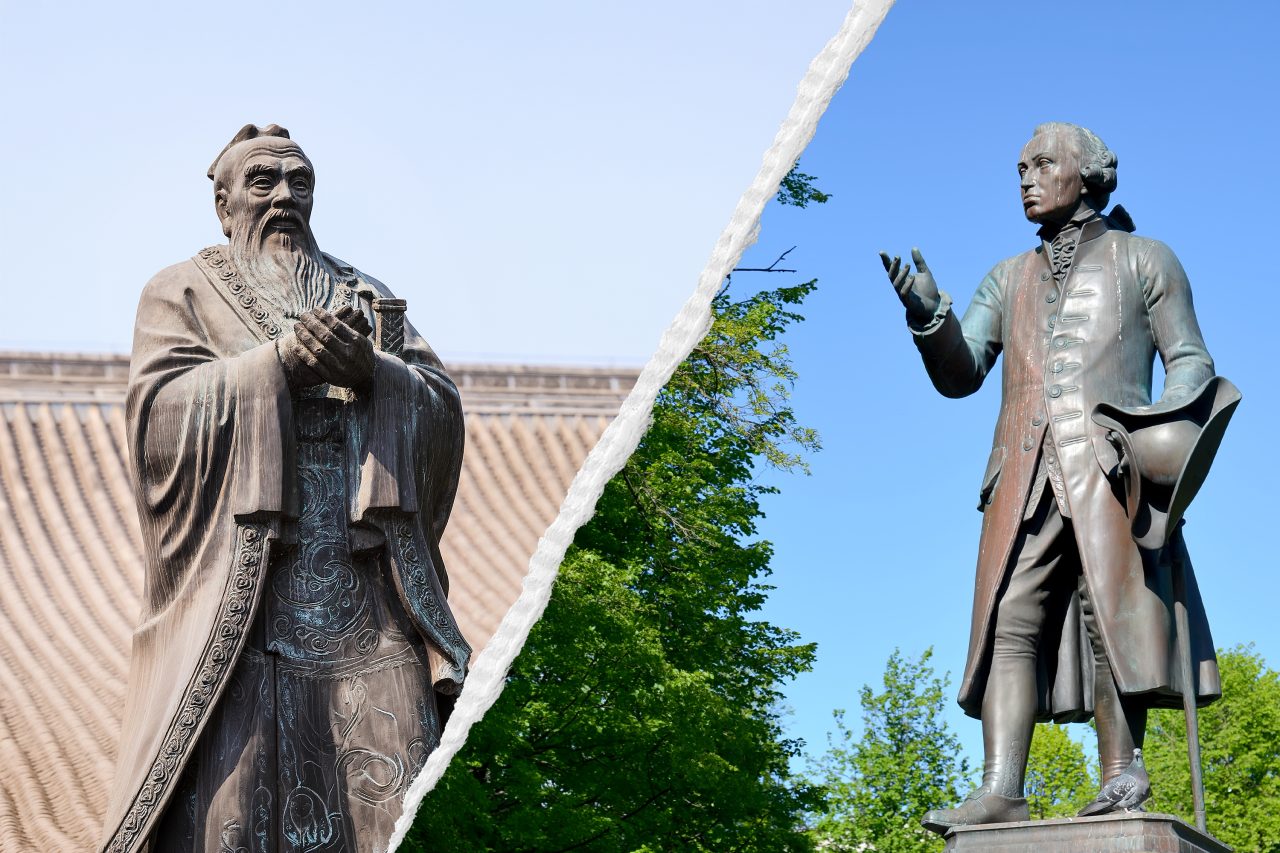
Statue av Konfutse og Kant
Sources
- Stanford Encyclopedia of Philosophy – Confuciushttps://plato.stanford.edu/entries/confucius/
- Internet Encyclopedia of Philosophy – Confuciushttps://iep.utm.edu/confucius/
- Stanford Encyclopedia of Philosophy – Confuciushttps://plato.stanford.edu/entries/confucius/
- Stanford Encyclopedia of Philosophy – Chinese Ethics https://plato.stanford.edu/entries/ethics-chinese/
Image and Video Rights
- Adobe Stock
- Getty Images
- Getty Images
- Adobe Stock
- Getty Images
- Getty Images
- Getty Images
- Adobe Stock
- Adobe Stock


